Hard water plumbing damage Utah occurs as calcium and magnesium deposits create scale buildup that clogs pipes, reduces water pressure, and significantly shortens the lifespan of appliances like water heaters. Homeowners can mitigate these issues by installing a high-quality water softener, which neutralizes mineral accumulation and prevents costly repairs over time.
If you have noticed white, crusty deposits on your faucets or a sudden drop in shower pressure, you are likely witnessing the early stages of mineral damage. In Fillmore, Utah, the high concentration of calcium and magnesium in our water supply is more than just a cosmetic nuisance; it is a direct threat to your home's infrastructure. These minerals accumulate inside your pipes and appliances, leading to restricted flow and catastrophic water heater failure. At Gobes Plumbing, we believe that understanding these risks is the first step toward long term prevention. In this guide, we will detail the visual red flags of mineral buildup, explain the mechanics of pipe constriction, and discuss why your water heater is particularly vulnerable. You will also learn about the most effective filtration and softening solutions to safeguard your plumbing for years to come.
The Hidden Cost of Living with Utah Hard Water
Residents of Millard County are likely familiar with the persistent white film on glassware or the chalky residue on showerheads. This is a direct result of Utah having some of the hardest water in the nation. Hard water is defined by a high concentration of dissolved minerals, primarily calcium and magnesium, picked up as groundwater travels through limestone and chalk deposits. While these minerals are generally safe for consumption, they are aggressive toward residential and commercial infrastructure.
Most homeowners focus on aesthetic annoyances like spotted dishes or stiff laundry. However, the real threat is the hard water plumbing damage Utah homes face beneath the surface. Over time, these minerals precipitate out of the water, bonding to the interior of your pipes and mechanical components. This process leads to accelerated pipe corrosion and premature appliance failure, often cutting years off the expected lifespan of water heaters and dishwashers.
At Gobes Plumbing, we provide reliable professional plumbing services tailored to the specific mineral profile of Fillmore. We understand that local water requires accurate diagnostics to prevent minor scaling from turning into a full system failure. If you are concerned about the integrity of your home's pipes, you can contact our experienced team for a thorough assessment of your system.
Visual Red Flags: Signs Your Plumbing is Struggling with Mineral Buildup

Identifying the early warning signs of mineral accumulation can save Millard County residents thousands in repair costs. While some indicators are merely cosmetic, others point to active hard water plumbing damage Utah homes frequently encounter. Understanding these signals allows for proactive maintenance before a small leak becomes a major flood.
The most obvious red flag is the presence of white, crusty limescale on your faucets and showerheads. If you see this buildup on the exterior of a fixture, it is a guaranteed indicator that the same calcification is occurring within your valves and supply lines. This internal buildup restricts movement in cartridge valves and creates friction that degrades rubber seals, leading to persistent drips.
Beyond visible crust, you may notice a significant drop in water pressure. As minerals coat the aerators and the interior walls of your pipes, the volume of water able to pass through decreases. This is often most noticeable in the shower, where flow becomes weak or uneven. Additionally, laundry that feels stiff or scratchy after a wash suggests that minerals are preventing detergents from fully rinsing out; this chemical reaction also leaves deposits inside the mechanical components of your washing machine and dishwasher.
Homeowners often ask, "How do you know if you have hard water damage?" The answer lies in distinguishing between temporary surface issues and permanent degradation. A temporary stain, like a water spot on a glass, can be wiped away. True damage, however, manifests as pitted metal, corroded pipe joints, or fixtures that no longer turn smoothly because of internal calcification. Once the mineral deposits penetrate the mechanical parts of your plumbing, the structural integrity is compromised.
Warning Sign | Impact on Plumbing System |
|---|---|
Limescale on Spouts | Signals internal valve and pipe scaling |
Reduced Flow | Indicates pipe diameter restriction |
Frequent Leaks | Often caused by scale-related corrosion |
Stiff Laundry | High mineral count causing appliance wear |
If you notice these red flags, obtaining accurate diagnostics is the next logical step. Our team can assess whether the buildup is isolated or if it indicates a larger systemic issue. For a comprehensive inspection, residents can contact our experienced team to ensure their home is protected from long term damage through reliable professional plumbing services.
The Slow Clog: How Hard Water Restricts Your Pipe Diameter

While surface stains are an eyesore, the most significant hard water plumbing damage Utah homeowners face happens deep within the supply lines. Inside copper and galvanized steel pipes, dissolved minerals precipitate out of the water and bond to the inner walls, creating a rock-hard layer known as scale. This process is strikingly similar to cholesterol buildup in a human artery. As the mineral layers thicken, the internal diameter of the pipe narrows. This restriction forces water to move through a smaller opening, which artificially increases the velocity and pressure against pipe joints and seals, eventually leading to structural fatigue.
A common question we hear is, "How long does it take for hard water to ruin pipes?" In high-hardness regions like Fillmore, the timeline is shorter than many realize. While a total pipe failure may take decades, noticeable efficiency drops and pressure fluctuations typically begin within just 2 to 5 years. In galvanized systems, the mineral buildup can eventually bridge the entire width of the pipe, leading to a complete blockage that requires a full repipe.
Furthermore, scale is rarely uniform. It often forms in jagged, localized patches. These deposits can trap moisture and corrosive agents against the metal surface, leading to localized corrosion beneath the scale layer. This is a primary cause of pinhole leaks in copper piping; the exterior of the pipe may look fine, but the metal has been eaten away from the inside out. To catch these issues before they result in a flood, we provide accurate diagnostics to evaluate the state of your plumbing. If you suspect your flow is restricted, you should contact our experienced team for reliable professional plumbing services to restore your system's integrity.
Why Your Water Heater is the Biggest Victim of Hard Water
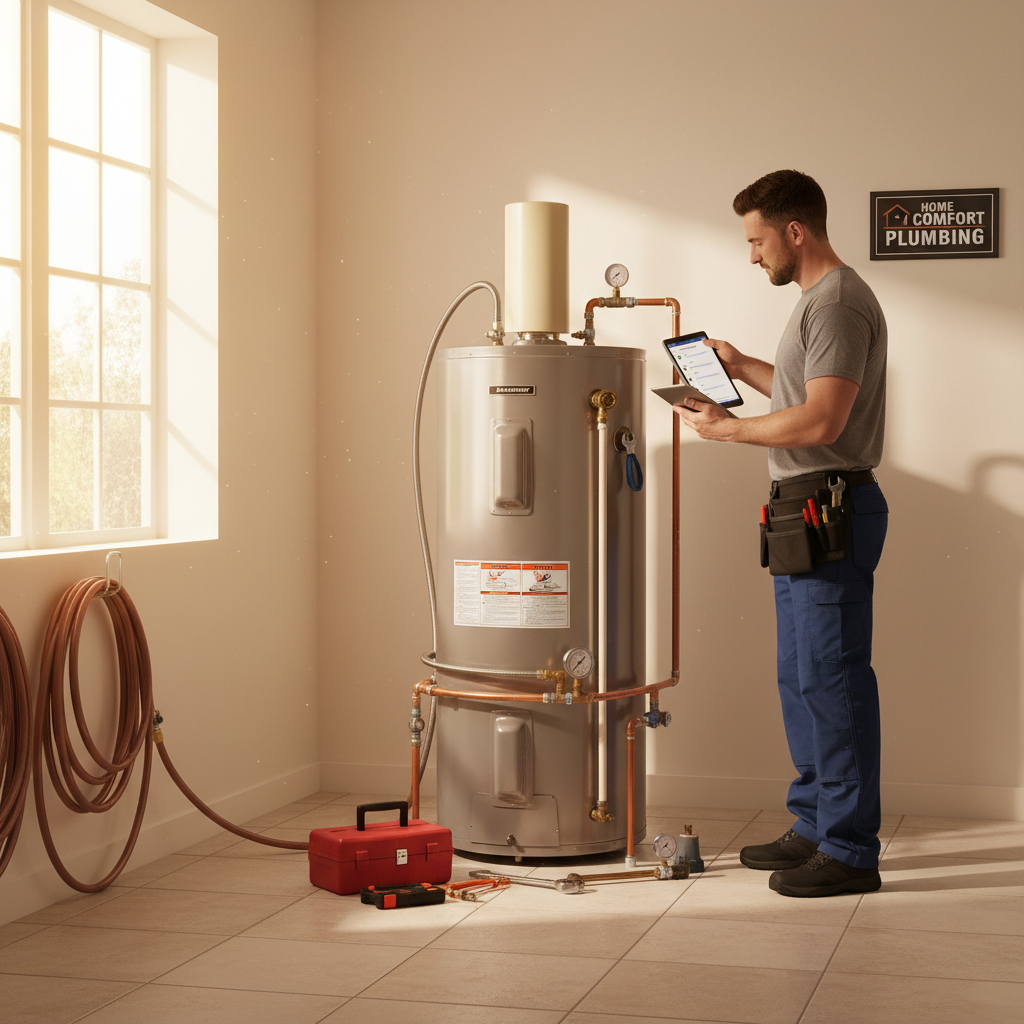
While narrowing pipes are a long term concern, your water heater is the immediate victim of high mineral concentrations. The process of heating water physically changes its chemistry; as temperatures rise, calcium and magnesium lose their solubility and precipitate into solid particles much faster than they do in cold supply lines. In Fillmore homes, these minerals settle at the bottom of the tank, creating a thick, hardened sediment floor that interferes with the appliance's basic function.
Many homeowners ask, "What are the first signs of a water heater going bad?" In our region, the most common symptom is a distinct popping, rumbling, or "kettling" sound coming from the tank during a heating cycle. This noise occurs when water trapped beneath the thick sediment layer boils and steam bubbles burst through the mineral crust. This isn't just an audible annoyance; it is a clear indicator of mechanical stress. The sediment acts as a heavy thermal insulator between the burner and the water. To reach the set temperature, the unit must run longer and hotter, which significantly inflates your monthly energy bills and can cause the tank bottom to overheat and eventually crack.
Managing your thermostat is a critical part of mitigation. Professional plumbers often discuss the "135 rule," which notes that 135 to 140 degrees is the industry standard for killing bacteria like Legionella. However, these higher temperatures drastically accelerate the rate of mineral scaling. For homes dealing with the specific hard water plumbing damage Utah environments present, we typically recommend a balanced setting of 120 degrees. This provides sufficient heat for domestic use while slowing the accumulation of rock like buildup. If you are hearing strange noises or noticing a drop in hot water volume, our team provides accurate diagnostics to determine if a professional flush can save the unit. You can contact our experienced team to schedule a system check and ensure your home continues to receive reliable professional plumbing services that protect your investment.
Water Softeners vs. Filtration: Choosing the Right Shield for Your Home
Protecting your home from the aggressive minerals found in Millard County requires choosing the right technology. While many homeowners look at filtration as a catch-all solution, there is a fundamental difference between filtering water and softening it. Standard carbon filters excel at removing chlorine, tastes, and odors, but they generally leave dissolved calcium and magnesium untouched. To effectively combat the hard water plumbing damage Utah systems endure, you must address the minerals themselves.
Feature | Ion-Exchange Water Softener | Water Conditioner (Salt-Free) | Standard Filtration |
|---|---|---|---|
Mineral Action | Physically removes calcium and magnesium | Alters mineral structure to reduce sticking | Removes sediment, chlorine, or chemicals |
Infrastructure Protection | Prevents and can slowly reduce existing scale | Minimizes new scale buildup | No protection against mineral scaling |
Appliance Impact | Maximum protection for heaters and washers | Moderate protection | No impact on appliance lifespan |
Best Local Use | High hardness areas like Fillmore | Moderate hardness environments | Improving water taste and clarity |
In Fillmore, a whole-home ion-exchange water softener is the gold standard for protecting your infrastructure. These systems use resin beads to swap mineral ions for sodium or potassium ions, ensuring the water entering your pipes cannot form scale. Installing a softener is a practical investment that can extend the lifespan of your plumbing and appliances by up to 30 percent.
Some residents rely on temporary fixes like soaking showerheads in vinegar to dissolve white crust. While these methods are fine for restoring flow to a single fixture, they are surface-level treatments. They do nothing to protect the miles of pipe hidden behind your walls or the delicate internal components of your water heater. For a permanent solution, our team provides accurate diagnostics to help you choose a system sized correctly for your specific household needs. You can contact our experienced team to learn more about reliable professional plumbing services that safeguard your home’s value and long term functionality.
Professional Maintenance: The Fillmore Homeowner's Strategy
Maintaining a plumbing system in Millard County requires a shift from reactive repairs to a structured maintenance strategy. To mitigate the most severe hard water plumbing damage Utah homeowners encounter, annual water heater flushing is essential. This process removes loose calcium and magnesium sediment before it solidifies into a rock like crust that destroys heating elements and tank linings. Leaving this sediment to settle creates an insulating layer that forces the unit to overheat, leading to eventual structural failure.
Along with flushing, homeowners should inspect the sacrificial anode rod every 2 to 3 years. This rod attracts corrosive elements to protect the steel tank from rusting; however, the aggressive mineral content in Fillmore, combined with the chemical exchange in a water softener, can cause these rods to deplete faster than in other regions. Replacing a worn rod is a low cost way to extend a tank's life by several years.
Beyond DIY steps, accurate diagnostics from a licensed professional provide a clear view of your system’s internal health. Our team at Gobes Plumbing follows a transparent, code compliant approach for every inspection in Millard County, using modern tools to identify scale accumulation in branch lines and main stacks. Catching these issues early often prevents the need for a disruptive and costly full repipe. For a comprehensive check of your home’s infrastructure, contact our experienced team to schedule reliable professional plumbing services that prioritize long term system integrity.
Managing hard water in Fillmore is essential for the longevity of your pipes and appliances. By staying proactive with maintenance and understanding local water conditions, you can avoid costly repairs down the road. While many tasks are manageable for homeowners, sometimes you need a specialized perspective to ensure your system is truly optimized. If you want expert help protecting your Utah home, learn more about our team and how we support the local community with reliable plumbing solutions.