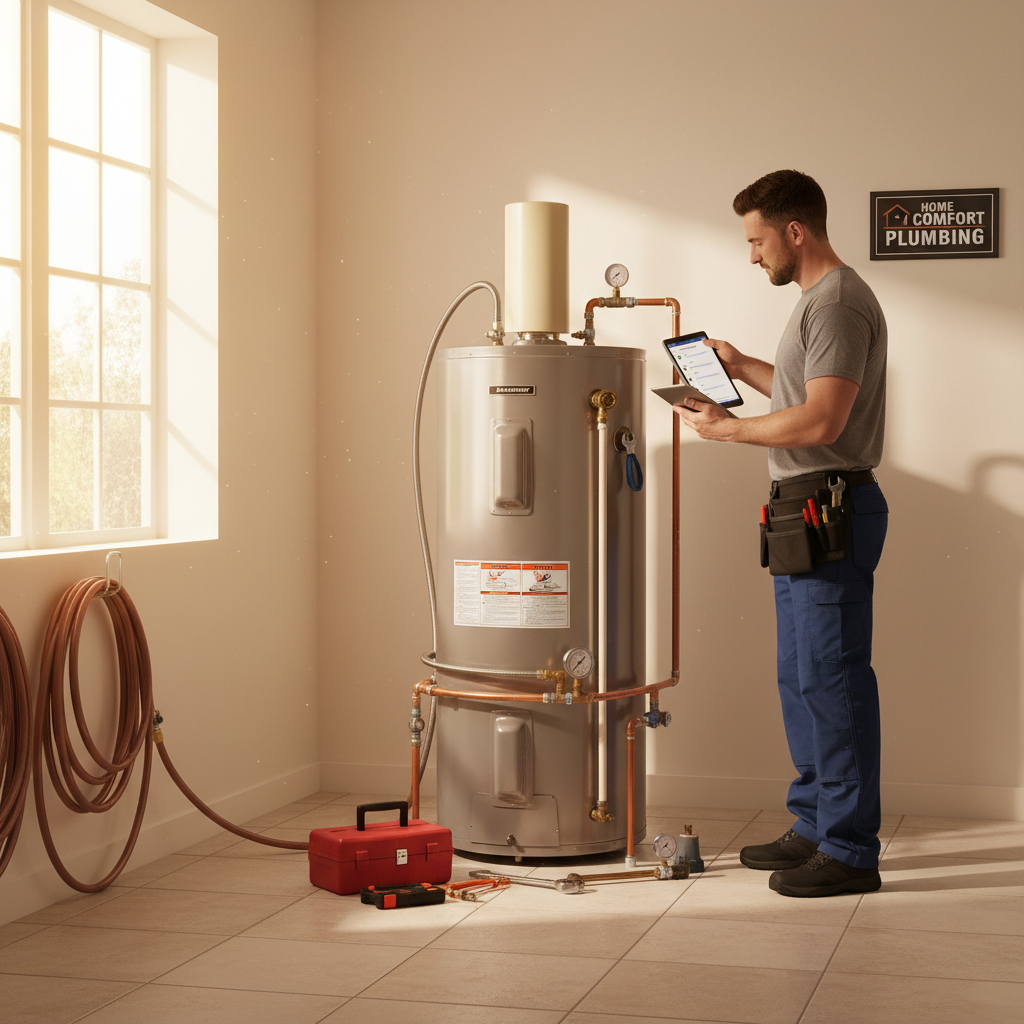
Effective water heater maintenance involves flushing the tank at least once per year to remove sediment, especially in regions with hard water like Utah. Homeowners should also test the temperature and pressure relief valve annually and inspect the sacrificial anode rod every three years to prevent tank corrosion and ensure safe operation.
There is nothing quite as jarring as stepping into a freezing shower on a snowy Utah morning, only to realize your water heater has finally surrendered to the elements. For homeowners along the Wasatch Front, the primary culprit is almost always our exceptionally hard water, which deposits calcium and magnesium that gradually calcify the bottom of your tank. This sediment does more than just cause strange knocking sounds; it forces your system to work harder, drives up utility costs, and eventually causes the tank to leak. In this guide, Gobes Plumbing shares the professional insights you need to safeguard your investment. You will learn the science behind sediment buildup, the critical role of your sacrificial anode rod, and the proper process for flushing your unit. By understanding these maintenance essentials, you can extend your system’s lifespan and ensure your home stays comfortable year round.
Why Utah Hard Water is the Number One Enemy of Your Water Heater
Residents in Fillmore and across Millard County live in a region known for exceptionally high mineral content in the groundwater. While soft water contains low concentrations of dissolved minerals, the water flowing into local homes is often described by plumbers as liquid rock. This liquid rock is packed with calcium and magnesium ions that remain dissolved while the water is cold, but they become a major liability once they enter your home.
The problem begins inside your tank. As your water heater raises the temperature, a chemical reaction occurs. These dissolved minerals crystallize and solidify, turning into a hard, crusty substance known as scale. This scale clings to the heating elements in electric models or settles at the bottom of gas units, creating a thick barrier between the heat source and the water it is trying to warm. This process is relentless in Utah, as our specific mineral profile accelerates buildup faster than in almost any other part of the country.
While the national average lifespan for a storage tank water heater is roughly 10 to 12 years, the geological reality of Utah often changes that math. Untreated hard water is aggressive; it can corrode internal components and lead to catastrophic tank failure in as little as 6 to 8 years. Consistent water heater maintenance is not just a recommendation for Fillmore residents, it is a requirement to prevent the premature death of the appliance. If you are concerned about how local water quality is impacting your systems, you can contact Gobes Plumbing for professional plumbing services tailored to these specific local conditions.
The Science of Sediment: How Buildup Destroys Efficiency
As those minerals crystallize, gravity takes over. The solid particulates settle into a thick layer of sludge at the base of the tank. In a gas water heater, the burner is located directly beneath this floor. When a thick layer of mineral scale coats the bottom, it acts as a thermal insulator. The heat meant for the water is trapped within the sediment, forcing the burner to fire for longer durations to reach the desired temperature. This inefficiency directly increases your monthly utility costs.
You will often hear the physical manifestation of this struggle. If your unit begins making popping, rumbling, or banging sounds, it is experiencing a phenomenon called kettling. This occurs when water becomes trapped beneath the sediment layer; it reaches a boiling point and turns into steam bubbles that burst through the sludge. Beyond the noise, this causes localized overheating of the tank's steel bottom. Over time, the repeated cycles of excessive heat cause the metal to expand and contract beyond its design limits, resulting in tank fatigue and eventual leaks.
If you notice these sounds, seeking professional plumbing services for a system evaluation can prevent a total tank failure. Prioritizing regular water heater maintenance is the only way to clear this debris before it causes permanent structural damage.
Essential Water Heater Maintenance Checklist for Homeowners
Given the geological challenges in Millard County, proactive oversight is the most effective way to prevent a sudden cold shower or a flooded utility room. While some tasks require professional plumbing services, homeowners can perform a monthly visual and functional assessment to gauge the health of their system. Use the following checklist to ensure your unit remains safe and operational between professional visits.
Test the Temperature and Pressure Relief (TPR) Valve: This valve is a critical safety component located on the top or side of the tank. It is designed to open if internal pressure or temperature exceeds safe limits. Carefully lift the lever to discharge a small amount of water into the drain pipe, then release it. The valve should snap back and stop the flow immediately; if it leaks or remains stuck, the valve has failed and requires immediate replacement.
Conduct a Perimeter Leak Inspection: Examine the base of the tank and the floor surrounding it for any signs of moisture. Look closely at the cold water inlet and hot water outlet connections for rust or white, crusty mineral deposits. Even a small damp spot can indicate a slow weep that will eventually lead to a catastrophic tank failure.
Calibrate the Thermostat: We recommend setting your water heater to 120 degrees Fahrenheit. This temperature is sufficient to kill bacteria while preventing scalding. From a maintenance perspective, higher temperatures accelerate the crystallization of calcium and magnesium, so keeping the heat moderate directly slows down sediment accumulation.
Verify the Unit's Age: Locate the manufacturer's data plate on the side of the tank. The serial number usually contains a code for the month and year of production. Because Fillmore water is so hard, any unit approaching the eight year mark should be monitored with increased frequency.
For those performing electric water heater maintenance, an additional step involves checking the heating elements for scale. If you notice a humming sound when the unit is heating, it often indicates that the elements are encased in mineral buildup, which forces them to run hotter and burn out prematurely. If you are unsure how to interpret your findings, you can contact Gobes Plumbing for a comprehensive system diagnostic.
The Sacrificial Anode Rod: Your Tank's Secret Bodyguard
The most critical component of your tank is one you will likely never see during daily operation: the sacrificial anode rod. This long metal core, typically made of magnesium or aluminum, acts as the primary defense against internal rusting. Through a process called electrolysis, the rod attracts the corrosive elements in the water that would otherwise eat through the steel lining of your tank. It effectively sacrifices itself, corroding away while the tank remains intact.
In regions with softer water, manufacturers often suggest inspecting this rod every five years. However, the mineral density in Fillmore and Millard County demands a more aggressive schedule. We advise local homeowners to incorporate an anode rod inspection into their water heater maintenance routine every two to three years. Once the core wire of the rod is exposed or the rod has thinned significantly, its protective capabilities vanish. Spending roughly $50 on a replacement rod is one of the smartest investments a property owner can make; it prevents the structural failure of a tank that could cost $1,500 or more to replace. If you are unsure how to access or check this component, you can contact Gobes Plumbing for professional plumbing services to ensure your system remains shielded from the corrosive effects of our local water.
How to Flush Your Water Heater: A Step by Step Guide
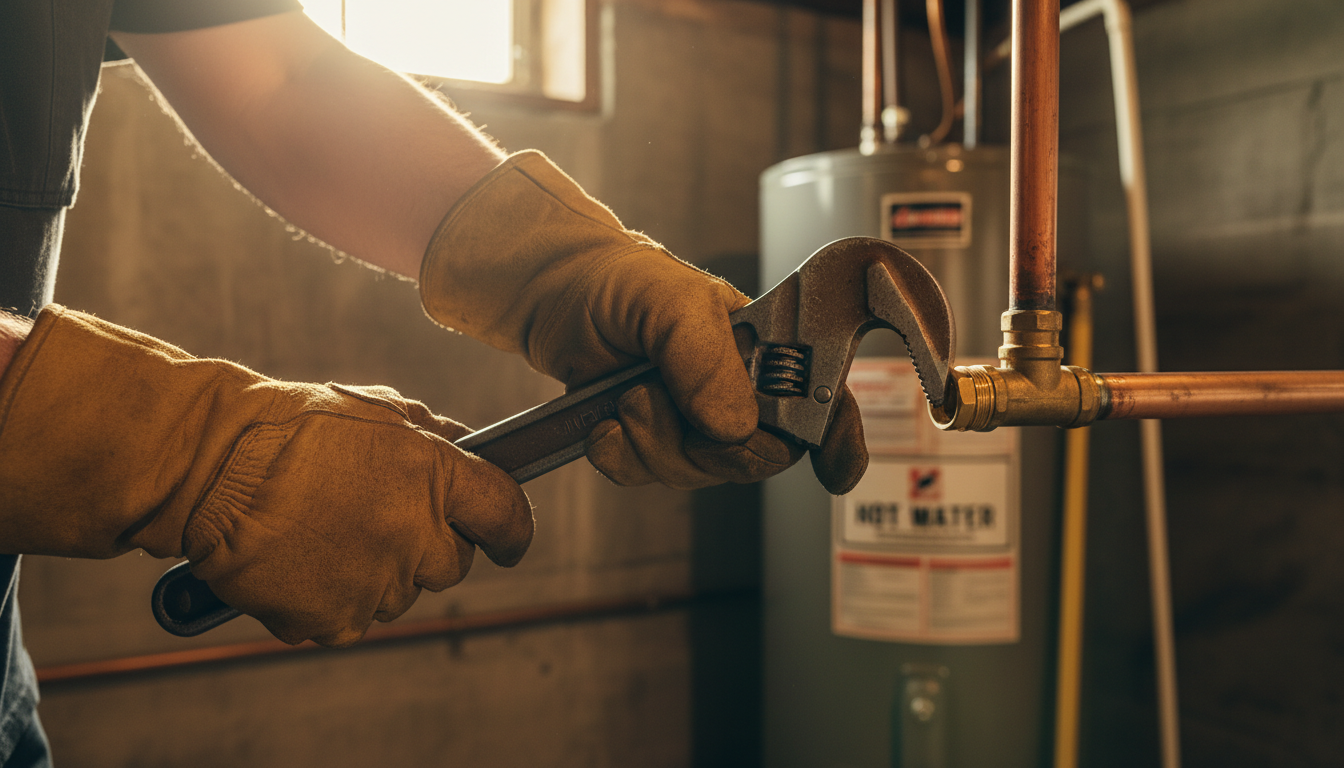
Protecting the anode rod addresses the chemical side of tank preservation, but performing a manual flush is the only way to physically remove the accumulated "liquid rock" from the bottom of the unit. For residents in Fillmore, performing this part of your water heater maintenance every six to twelve months is necessary to maintain efficiency.
Before you begin, safety is the priority. Turn off the energy source first. For a gas water heater, turn the thermostat dial to the "Pilot" setting. For an electric unit, switch off the dedicated breaker in your home’s main electrical panel. It is vital that an electric heater is powered down; if the water level drops below the upper heating element while it is energized, the element will burn out almost instantly.
Next, follow these steps to clear the sediment:
Shut off the Water: Close the cold water supply valve located on the pipe entering the top of the tank.
Connect a Hose: Attach a heavy duty garden hose to the drain valve near the base of the tank. Run the other end to a floor drain, your driveway, or a safe outdoor area. Remember that the water exiting the tank will be extremely hot.
Vent the System: Open a hot water faucet on a sink upstairs or elsewhere in the house to prevent a vacuum from forming. Then, slowly open the tank’s drain valve.
Monitor the Discharge: Watch the water as it exits the hose. In Millard County, it is common to see water that looks like "milky coffee" or contains large, white, chalky flakes. These flakes are solidified calcium deposits.
If the water remains cloudy or chunks of scale continue to exit after several minutes, the sediment buildup is likely advanced. In these cases, the sludge may be too thick for a standard DIY flush to clear, and you should contact Gobes Plumbing for a deep cleaning. Once the water runs clear, close the drain valve, disconnect the hose, and turn the cold water supply back on. Only restore power or gas once you have a steady stream of water flowing from your indoor faucets, confirming the tank is completely full. If you encounter a stuck valve or professional assistance is needed, our team provides professional plumbing services to ensure the job is done safely.
Professional Maintenance vs. DIY: When to Call Gobes Plumbing
Performing a basic flush is a productive Saturday task, but homeowners must recognize when a situation exceeds a DIY skill set. A common complication occurs with the drain valve. Many modern units are equipped with plastic valves that become brittle or seized due to mineral accumulation. Applying excessive force to a stuck plastic valve can cause it to snap off entirely, resulting in an uncontrollable flood of hot water. If a valve resists opening, it is safer to stop and contact Gobes Plumbing to avoid property damage.
Furthermore, professional water heater maintenance encompasses safety checks that require specialized tools and training. Our technicians perform comprehensive diagnostics on the burner assembly, exhaust venting, and gas supply lines to ensure there are no carbon monoxide leaks or fire hazards. These components are strictly off-limits for unlicensed individuals. At Gobes Plumbing, we provide professional plumbing services rooted in transparency. We focus on long-term solutions rather than temporary patches, providing the honest recommendations you need to keep your home safe and your water flowing.
Signs Your Water Heater Needs Immediate Replacement
Recognizing when a unit has reached its limit is vital for protecting your property from water damage. If you notice rusty or tea-colored water specifically from your hot taps, the internal steel tank is likely corroding because the protective lining has failed. Moisture or puddling around the base of the unit is another critical warning sign. While some leaks occur at external connections, water seeping from the tank jacket itself indicates a structural breach that cannot be repaired.
Frequent pilot light outages or consistent burner failures in an aging unit also suggest the system is nearing the end of its functional life. In these scenarios, routine water heater maintenance is no longer a viable solution. Once the integrity of the tank is compromised, replacement is the only way to avoid the high costs of emergency property restoration. If you observe these red flags, contact Gobes Plumbing to discuss professional plumbing services and explore high-efficiency replacement options suited for the specific mineral profile of Millard County water.